
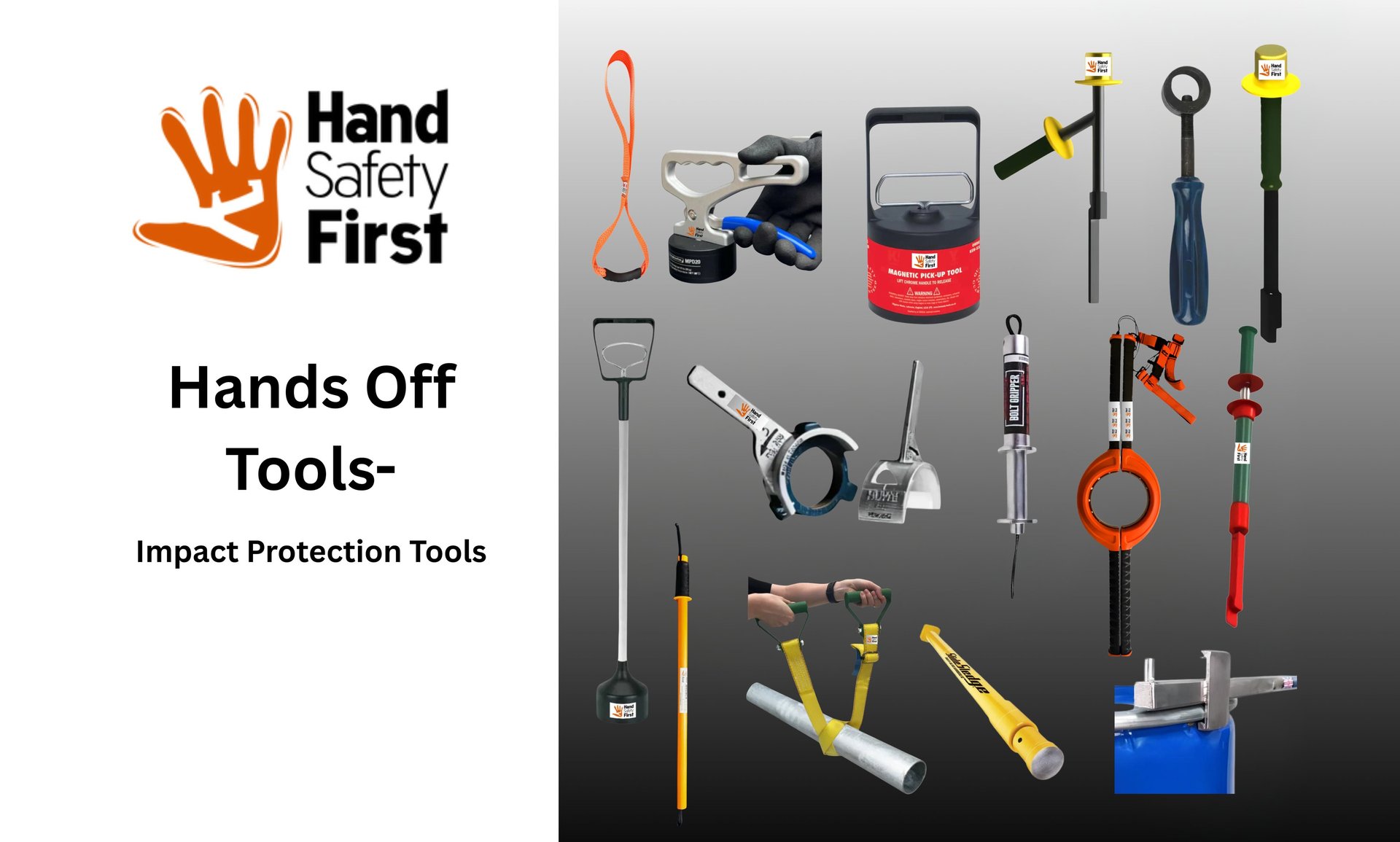
Hands Off Tools-
Impact Protection Tools
What “hands-off tools” means in safety engineering terms
In safety engineering, hands-off tools refer to engineered hand tools designed to physically separate a worker’s hands and body from hazardous energy zones during a task. Their primary function is risk elimination or risk reduction through distance, rather than relying on worker behavior, awareness, or PPE alone.
These tools are intentionally designed to replace direct hand contact with a controlled mechanical interface.
Why these tools exist (the problem they solve)
Most hand and finger injuries happen because of:
Impact exposure (hammer strikes, rebounds, flying chips)
Pinch points (between object + floor, object + rigging, object + support, object + adjacent object)
Crush hazards (dropped loads, shifting loads, rolling cylinders/pipe)
Unexpected movement (snap-back, stored energy release, rotation, rolling, swinging)
Poor grip + fatigue (slip → reflex grab → injury)
Hands-off tools change the risk equation by:
Increasing standoff distance
Creating controlled contact surfaces (hooks, V-heads, saddles, forks, clamps)
Improving stability and alignment (keeping a workpiece from rotating/rolling)
Reducing “last-second finger placement” (when people try to “just hold it”)
Core design principles of good hands-off tools
Across all your categories (hammering, chiseling, pipe/cylinder/rigging handling), the best tools share a few engineering principles:
A) Standoff distance (the #1 feature)
The handle length and geometry are chosen so hands remain outside:
impact arc (hammer)
chip trajectory zone (chiseling)
pinch zone around contact edges (lifting/rolling loads)
B) Positive capture (prevents slip-off)
Look for designs that don’t rely on friction alone:
V-cradles for pipe/round stock
Saddles for cylinders
J-hooks / C-hooks for choker or sling engagement
Forked ends for shifting/positioning small loads
C) Anti-rotation / anti-roll control
Round objects roll. The tool must resist it:
textured/serrated cradle inserts
dual-contact points
geometry that “locks” around the curvature
D) Impact and shock resistance
For hammering/chiseling accessories:
high-toughness steel or engineered polymer where appropriate
replaceable striking caps / wear inserts
controlled rebound
E) Ergonomics that discourage unsafe behavior
If a tool is awkward, workers will bypass it.
balanced weight
glove-friendly handle diameter
non-slip grip
intuitive “where to hold” cueing
F) Inspection + maintainability
visual wear indicators
replaceable tips
simple cleaning (especially with mud, oil, grease)
Where hands-off tools fit in the safety hierarchy
Hands-off tools are an engineering control / administrative control hybrid:
Engineering: physically separates hands from hazard zone
Administrative: requires correct selection + training + enforcement
They work best when paired with:
job hazard analysis (JHA/JSA)
line-of-fire training
good housekeeping (slips and unstable placements create sudden pinch points)
correct PPE (eye/face protection for chiseling; gloves appropriate to task)
Category Research
Safe hammering tools (hands-off hammering)
Typical injuries in hammering :
thumb/finger impact
nail/pin strike
“glancing blow” causing hand hit
rebound and hand contact
struck-by from flying fragments
What “safe hammering tools” usually are
These are work-holding tools designed to let the worker strike something without holding it by hand, such as:
magnetic holders (for nails, pins, small fasteners)
clamp-style holders for wedges, small blocks, spacers
tongs/pliers optimized for striking operations (long reach, stable jaws)
impact-safe positioning sticks to align small items before hammeringHSF Long Reach Magnetic Tool
Key performance requirements
Strong enough retention so the part doesn’t fly off when struck
Alignment support so the workpiece stays square
Handle length sufficient to keep the hand out of the hammer’s miss path
Non-slip, glove-friendly grip
Does not deform under repeated strikes (or has replaceable strike zones)
High-risk use cases where hands-off hammering matters most
setting wedges/shims
striking pins in fittings
aligning parts during assembly
hammering near edges where parts can “kick out”
Tools and It's Key Features:
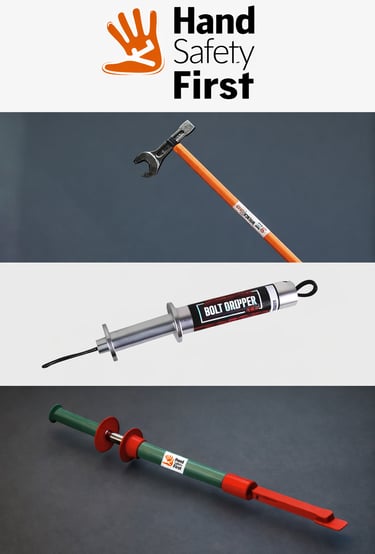
HSF Wrench Grab:
A hands-free gripping tool designed to securely hold wrenches during hammering operations, keeping hands away from impact zones.
Key Features: Anti-slip grip design, impact-resistant build, improved strike accuracy, reduces pinch-point injuries.HSF Bolt Gripper:
Engineered to firmly hold bolts in position while hammering or tightening, minimizing direct hand contact.
Key Features: Strong clamping mechanism, ergonomic handle, high-strength steel construction, enhanced operator safety.HSF Hammerless Tong Die Driver:
A precision-engineered die driver that eliminates the need for manual hammering, improving safety and control.
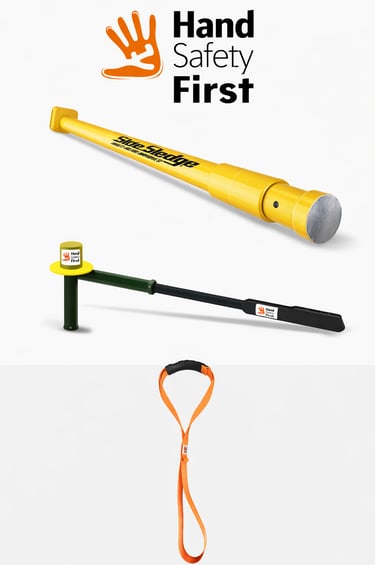
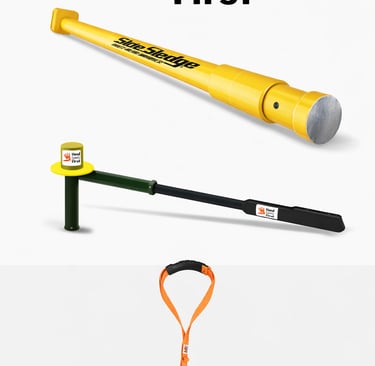
Key Features: Hammer-free operation, controlled force application, durable alloy body, reduces hand injury risks.HSF Slidesledge:
A controlled-impact sliding hammer tool designed to deliver force without exposing hands to direct strike zones.
Key Features: Guided slide mechanism, shock-absorbing grip, heavy-duty construction, safer impact delivery.HSF Straight Tong Die Driver:
A straight-aligned die driver built for safe and accurate tong die installation and removal.
Key Features: Straight drive alignment, reinforced impact head, ergonomic handling, minimizes crush injuries.HSF Huwe Hammer Union Wrench:
Specially designed wrench for safely tightening and loosening hammer unions without direct hammer contact.
Key Features: Heavy-duty torque design, anti-slip grip, spark-resistant material options, improved operational safety.HSF Angled Tong Die Driver:
An angled configuration die driver that provides better access and safer positioning in confined working spaces.
Key Features: Angled head design, precision impact surface, durable industrial-grade material, enhanced accessibility.HSF Tong Handles :
Ergonomically designed handles that provide secure grip and control while handling tong assemblies.
Key Features: Non-slip grip surface, industrial durability, improved leverage control, reduces hand fatigue and injury risk.
Safe chiseling tools (hands-off chiseling)
Typical chiseling hazards :
fingers close to chisel head (classic “thumb strike”)
flying chips into hands/arms/face
chisel slip → hand drives forward into the workpiece
mushroomed chisel heads fragmenting
What “safe chiseling tools” usually are
Hands-off chiseling is generally done via:
chisel holders that grip the chisel shaft with a long handle
hand guards / shields that create a barrier between hand and chisel head
chisel guides that stabilize angle and reduce slipping
in some work, mechanical chippers replace manual striking (higher control)
Key design features that actually reduce injuries
Shield/guard that is large enough to block a missed hammer blow
Firm retention so the chisel doesn’t pop out or rotate
A handle that encourages the hand to stay behind the guard (not “choking up”)
Compatibility with common chisel sizes used on site
Best-practice notes
Keep chisels properly dressed (avoid mushrooming)
Eye/face protection is mandatory because “hands-off” reduces hand strikes but not chip hazards
Use controlled striking surfaces and stable work support to reduce slip
Tool and It's Key Features:
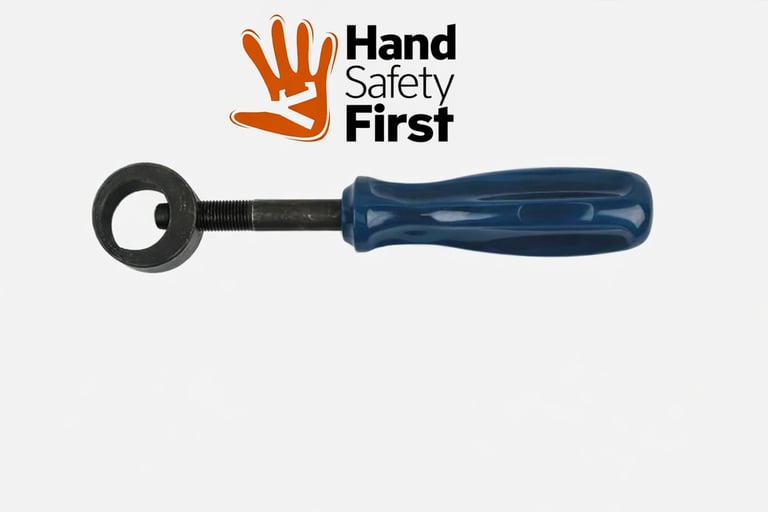
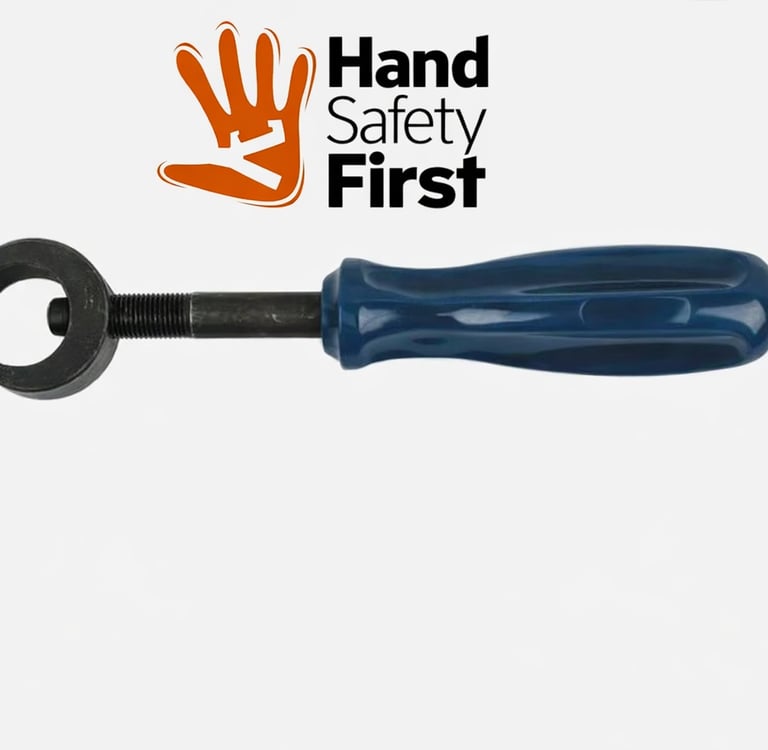
HSF Punch Chisel Holder
The HSF Punch Chisel Holder is a hands-safe chiseling solution designed to keep fingers away from direct impact zones during hammering operations. Built for industrial durability, it ensures precise punch alignment while significantly reducing the risk of hand and finger injuries.
Key Features:
Keeps hands safely away from hammer impact area
Strong magnetic / secure grip mechanism for firm punch holding
Heavy-duty industrial-grade construction
Ergonomic handle for better control and stability
Reduces pinch-point and crush injury risks
Suitable for high-impact chiseling applications in industrial environments.
Safe pipe lifting tools (round-load control)
“Pipe lifting” can mean two different realities:
True lifting with rigging (sling, clamp, magnet, lifter)
Handling/positioning (picking up one end, shifting, aligning, rolling slightly)
Hands-off tools are usually strongest in #2 and sometimes in #1 depending on capacity and certification requirements.
Main hazards with pipe
rolling (uncontrolled movement)
pinch between pipe and ground/support
finger crush during alignment
sudden rotation when tension is applied (rigging)
Common hands-off solutions
V-head lifting/positioning sticks to cradle and guide
pipe hooks to pull/roll without grabbing under the pipe
pipe tongs designed for a secure bite and long reach
alignment bars/positioners for fit-up without hand placement in gaps
What to evaluate for “safe”
Is it intended for lifting (suspended load) or only positioning?
Rated capacity (if any), safety factor, and whether it requires inspection logs
How it prevents roll-out (V geometry + retention)
Surface interaction: does it damage coating/paint or create sparks (important in hazardous areas)
Tool and It's Key Features:
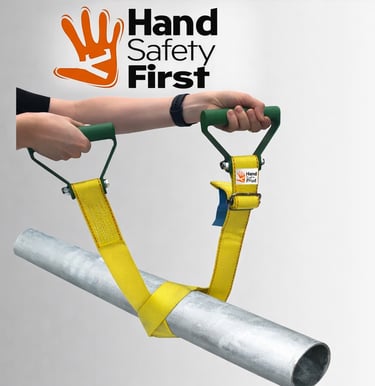
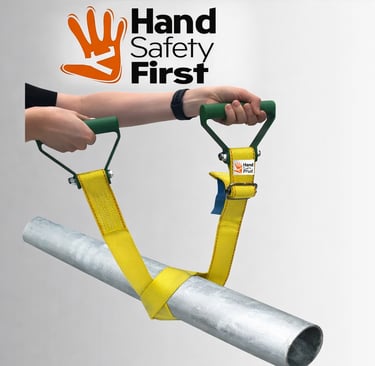
HSF Manual Lifting Slings:
are designed to enable safe pipe lifting and positioning while keeping hands away from pinch and crush points during rigging operations. Built for heavy-duty industrial use, they ensure controlled load handling and improved operator safety in demanding environments.
Key Features:
High-strength, durable webbing for reliable pipe load support
Reinforced stitching for enhanced load stability
Lightweight and easy to maneuver
Reduces direct hand contact with suspended loads
Suitable for construction, oil & gas, and industrial applications
Safe Choke Vale lifting tools
Interpreting “choke wale lifting tools” as choker sling / choke hitch handling tools used in rigging.
Rigging pinch-point reality
The most dangerous moment is setting/adjusting rigging near the load:
fingers caught between sling and load edge
hands in bight (sling tightening zone)
load shifts and traps fingers while tension comes on
Hands-off rigging tools usually are
sling/choker placement hooks (long handle, captures sling)
rigging keeper tools to position the choke point without hands near edges
tagline-like control tools that guide sling placement while standing off
Key features that matter
The tool must keep the worker out of the “bite” zone when tension is applied
Positive capture: sling should not drop unexpectedly
Materials that won’t cut/abrade synthetic slings (rounded edges are critical)
Length appropriate to keep distance while maintaining control
Tool and It's Key Features:
HSF Manual Lifting Slings :
are specially designed hands-safe lifting solutions for choke valve handling, enabling secure and controlled manual positioning without direct hand contact in pinch zones.
Key Features:High-strength load-bearing material, reinforced stitching for durability, anti-slip grip design, and improved load stability for safer choke valve lifting operations.
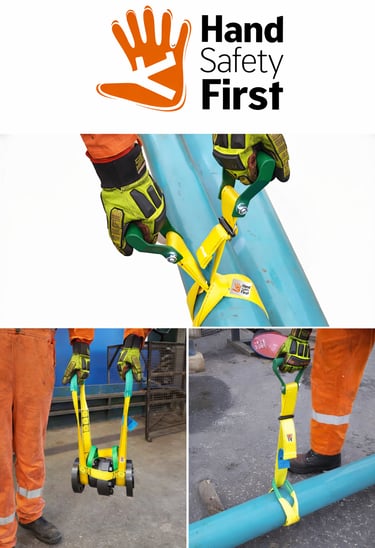
Single Handle SafeLift Sling:
The Single Handle SafeLift Sling is designed to provide controlled, hands-safe guidance of suspended loads while maintaining a safe working distance.
It enhances operator stability and reduces direct hand contact during lifting and shifting operations.Key Features:
Single reinforced ergonomic handle
High-strength industrial-grade sling material
Improves load control and positioning
Reduces pinch-point and crush injury risks
Lightweight and easy to deploy
Suitable for confined lifting areas
Double Handle SafeLift Sling:
The Double Handle SafeLift Sling offers enhanced control and balanced load maneuvering through its dual-handle design.
It ensures safer handling of suspended loads by allowing better grip distribution and improved operator stability.
Key Features:
Dual ergonomic reinforced handles
Heavy-duty, wear-resistant sling construction
Provides superior load stability and alignment
Keeps hands away from impact and pinch zones
Ideal for larger or heavier suspended loads
Durable for demanding industrial environments
Safe Pipelifting tools
A Safe Scrap Lifting Tool is a hands-free safety solution specifically designed to lift, retrieve, and handle ferrous metal scraps without direct hand contact. It helps prevent common workplace injuries such as cuts, punctures, crush injuries, and pinch-point accidents caused by sharp or heavy scrap materials.
Core Safety Features:
✔ Keeps hands away from sharp metal edges
✔ Minimizes bending and ergonomic strain
✔ Reduces risk of cuts and puncture wounds
✔ Prevents pinch-point and crush injuries
✔ Improves compliance with industrial safety standards
✔ Enhances operational efficiency and housekeeping safety
Tool and It's Key Features:
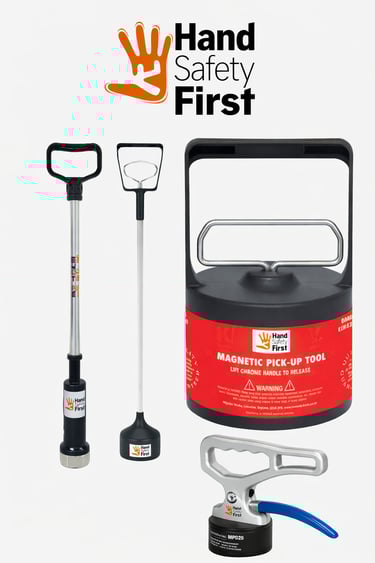
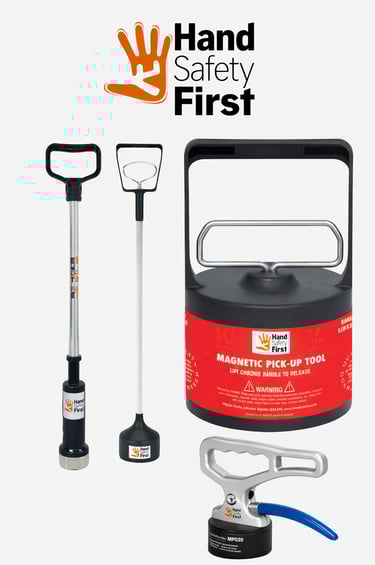
HSF Magnetic Scrap Picker:
A heavy-duty magnetic tool designed to safely collect metal scraps without direct hand contact, reducing injury risks in industrial environments.
Its powerful magnet ensures quick pick-up of nails, shards, and ferrous debris while keeping operators away from sharp edges.
Key Features:
High-strength industrial magnet
Ergonomic long-handle design
Lightweight yet durable construction
Reduces bending and hand injuries
HSF Magnetic Hand Lifter:
Engineered for controlled lifting of small ferrous metal components, this tool prevents direct hand exposure to sharp or hot materials.
It enhances operator safety and precision during fabrication, workshop, and site operations.
Key Features:
Strong magnetic grip
Compact and easy-to-handle design
Improves load control
Minimizes pinch-point risks
HSF Long Reach Magnetic Tool:
A long-reach magnetic solution designed to retrieve metal objects from confined or hard-to-access areas safely.
It helps workers maintain a safe distance while lifting or positioning metal scraps and components.
Key Features:
Extended reach for safe operation
High magnetic holding capacity
Ideal for confined spaces
Reduces bending and strain injuries
HSF Magnetic Pick-Up Tool:
A precision magnetic pick-up tool built for safely collecting small ferrous items from industrial floors or machinery areas.
It prevents direct contact with sharp scrap materials, improving workplace safety and efficiency.
Key Features:
Strong rare-earth magnet
Lightweight and portable
Quick-release functionality
Durable industrial-grade build
Safety Starts Here.
📞 +91 7386110618
✉ info@handsafetyfirst.com
🌐 handsafetyfirst.com
Announcement: PSC Hand Safety India Pvt Limited has entered into a definitive agreement to acquire the brand Hand Safety First effective on Oct 31, 2025
Contact
Reach out for quotes or product info
Phone
info@handsafetyfirst.com
+91 738110618
Website
handsofftools.com